What Is Liability Insurance, and How Does It Protect You?

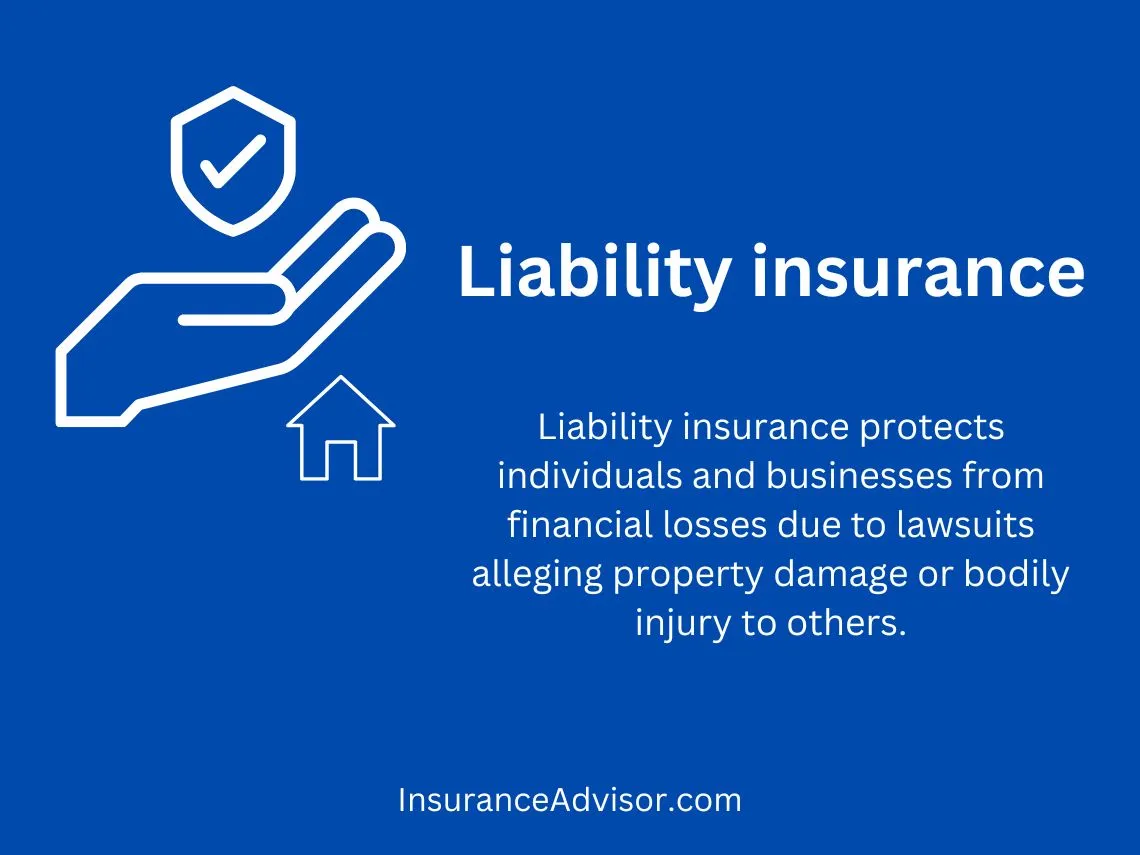
Liability insurance is a type of business insurance that pays for legal costs and financial damages when your company is held responsible for injuring someone or damaging their property. It's the foundation of most commercial insurance programs — covering everything from a customer slipping in your store to a professional mistake that costs a client money.
There are seven main types of liability insurance most businesses consider: general liability, professional liability (errors and omissions), employer's liability, product liability, cyber liability, commercial umbrella, and personal liability. Which ones you need depends on your industry, size, and risk exposure.
At a glance:
- Covers third-party bodily injury, property damage, and legal defense costs
- Typically costs $400 to $3,000+ per year for small businesses
- Required in some industries (medical, legal, financial) and by many landlords and clients
- Does not cover employee injuries (that's workers' compensation) or intentional acts
How Liability Insurance Works
Liability insurance works on a simple principle: when a third party — a customer, client, vendor, or member of the public — is injured, has their property damaged, or suffers financial harm because of your business operations, they can file a claim against you.
If your business carries liability insurance, your insurer handles the claim on your behalf. Coverage typically includes:
- Legal defense costs — attorney fees, court costs, and expert witnesses, even if the lawsuit turns out to be groundless
- Settlements — money paid to resolve a claim without going to court
- Judgments — damages awarded by a court if the case goes to trial
Every liability policy has three numbers you need to understand:
- Premium — what you pay the insurer, usually monthly or annually
- Coverage limits — the maximum the insurer will pay per claim and per year (for example, "$1 million per occurrence / $2 million aggregate")
- Deductible — what you pay out of pocket before insurance responds (often $0 to $5,000 for general liability)
If a claim exceeds your policy limits, you're responsible for the difference. That's why higher-risk businesses often add a commercial umbrella policy on top of their primary coverage.
Types of Liability Insurance
Businesses face different types of liability depending on how they operate, what they sell, and who they employ. Here are the seven forms most commonly carried:
General Liability Insurance
General liability (GL) is the foundational coverage almost every business needs. It protects against third-party bodily injury (like a customer slipping on a wet floor), third-party property damage (like a contractor accidentally breaking a client's window), and personal and advertising injury (like a libel or slander claim). Typical limits are $1 million per occurrence with a $2 million annual aggregate. Most commercial landlords require it as a condition of a lease.
Professional Liability Insurance (E&O)
Also called errors and omissions insurance, professional liability covers claims that your professional advice or service caused a client financial harm. If a consultant makes a recommendation that costs a client money, or an accountant miscalculates a tax filing, professional liability defends against and pays the resulting claim. This coverage is essential for consultants, IT firms, marketing agencies, financial advisors, and any business selling expertise. Read our full guide to professional liability insurance for a deeper breakdown.
Employer's Liability Insurance
Employer's liability covers lawsuits from employees whose injuries aren't fully covered by workers' compensation — such as claims of negligence, failure to provide safe working conditions, or third-party-over actions. In most states it's bundled with workers' compensation. Learn more in our guide to employer's liability insurance.
Product Liability Insurance
Businesses that manufacture, distribute, or sell physical products need product liability insurance to protect against claims that a product caused injury or property damage. It applies whether the defect was in design, manufacturing, or in the warnings and instructions provided to the customer.
Cyber Liability Insurance
As data breaches and ransomware attacks have become routine, cyber liability has become essential for any business that stores customer data. It covers breach notification costs, credit monitoring for affected customers, forensic investigation, regulatory fines, and lawsuits from customers whose data was exposed.
Commercial Umbrella (Excess Liability)
Umbrella insurance provides additional coverage above the limits of your primary liability policies. If a $2 million judgment exceeds your $1 million general liability limit, a $1 million umbrella policy covers the difference. It's common for higher-risk industries and businesses with significant assets to protect.
Personal Liability
Distinct from business liability, personal liability is included in most homeowners and auto insurance policies. It covers non-business claims — like a guest injuring themselves at your home. Since this guide focuses on business coverage, we won't cover personal liability in depth here.
What Liability Insurance Covers vs. Doesn't Cover
The specific inclusions vary by policy, but a standard liability policy typically covers and excludes the following:
| Covered | Not Covered |
|---|---|
| Third-party bodily injury | Injuries to your own employees (workers' compensation applies) |
| Third-party property damage | Damage to your own property (commercial property insurance applies) |
| Legal defense costs | Intentional or criminal acts |
| Settlements and judgments | Contractual liabilities you voluntarily assumed |
| Medical payments (minor injuries) | Professional errors (unless you carry E&O) |
| Personal and advertising injury | Pollution claims (in most policies) |
Always review your policy language or ask your insurance advisor for a walkthrough of specific inclusions and exclusions before you buy.
Who Needs Liability Insurance?
The short answer: nearly every business. Even a solo consultant working from home can be sued if their advice causes a client financial harm. Even a food truck can be sued if a customer gets sick.
Certain business types face particularly high liability exposure:
- Contractors and construction firms: Physical work carries constant injury and property damage risk.
- Consultants, agencies, and advisors: Professional advice can be second-guessed when results fall short.
- Retail and hospitality: Direct customer contact creates slip-and-fall exposure.
- Healthcare providers: Malpractice risk is nearly universal.
- Technology and SaaS companies: Cyber exposure combined with professional liability for service failures.
- Manufacturers and distributors: Product liability applies at every step of the supply chain.
Legal and contractual requirements:
- Some states require professional liability for specific licensed professions (attorneys, CPAs, medical providers, and real estate agents in certain states).
- Most commercial landlords require general liability as a condition of the lease.
- Many enterprise clients require vendors to carry professional liability with specific minimum limits.
- Some industries require liability coverage as a condition of professional licensure.
State-level requirements vary. If you operate in a specific state, check our state guides for Florida, Georgia, Pennsylvania, and other states we cover.
How Much Does Liability Insurance Cost?
Costs vary widely by business type, revenue, and coverage limits. Here are typical annual ranges for a small business:
| Coverage Type | Typical Annual Cost |
|---|---|
| General liability (solo or very small business) | $400 – $1,500 |
| General liability (10–50 employees) | $1,500 – $4,000 |
| Professional liability (E&O) | $500 – $3,000 |
| Product liability | $500 – $10,000+ (depends on product category) |
| Cyber liability | $500 – $2,500 |
| Commercial umbrella ($1M coverage) | $400 – $1,500 |
Factors that affect your premium:
- Industry risk profile - A general contractor pays more than a consultant.
- Annual revenue - Higher revenue means higher exposure.
- Number of employees - A larger workforce increases risk.
- Coverage limits - $2M limits cost more than $1M.
- Claims history - Prior claims raise premiums.
- Deductible - A higher deductible lowers your premium.
- Location - State and local liability laws affect rates.
For a broader look at insurance costs alongside other startup expenses, see our guide to calculating startup costs
Insurance Claim Examples
Three examples of how liability insurance protects businesses:
Example 1: The slip-and-fall
A customer entering a small retail store slips on a wet floor and breaks her wrist. She files a lawsuit seeking $75,000 for medical bills, lost wages, and pain and suffering. The retailer's general liability policy pays for legal defense ($8,000), a negotiated settlement ($45,000), and medical payments during the case ($3,000).
Example 2: The professional mistake
A marketing agency runs a campaign that inadvertently uses a competitor's trademarked language. The competitor sues the agency's client for trademark infringement, and the client sues the agency to recover its legal costs. The agency's professional liability policy covers defense ($22,000) and a settlement ($60,000).
Example 3: The product defect
A small manufacturer ships a batch of electronics with a wiring defect that causes property damage in customers' homes. Multiple customers file claims. The manufacturer's product liability policy covers the class action defense, a recall, and settlements totaling $180,000.
How to Get Liability Insurance
Four steps to getting the right coverage in place:
- Assess your exposure: Identify which types of liability apply to your business — general, professional, product, cyber, or others.
- Determine coverage limits: Landlord leases, client contracts, and state requirements often set the floor. $1M per occurrence / $2M aggregate is standard for most small businesses.
- Get quotes from multiple carriers: Rates vary significantly. An independent advisor can compare quotes from multiple insurers side-by-side.
- Review and bind the policy: Read the policy language carefully—especially exclusions—before you sign.
For most small businesses, working with an independent insurance advisor is faster than going direct. Advisors compare rates across carriers and can bundle coverages into a Business Owner's Policy (BOP) for savings.
Frequently Asked Questions about Liability Insurance
No. General liability is one specific type of liability insurance. Liability insurance is the broader category that includes general, professional, employer's, product, cyber, and umbrella coverage.
"Full coverage" is a term more common in auto insurance than in commercial insurance. For business insurance, you typically stack multiple coverages — liability, property, and workers' compensation — into a Business Owner's Policy (BOP) or a commercial package policy for comprehensive protection.
Yes. Sole proprietors face the same third-party liability exposure as larger businesses, and because they don't have the legal separation of an LLC or corporation, a lawsuit can reach personal assets. Solo consultants are also commonly required to carry professional liability by client contracts.
$1 million per occurrence and $2 million aggregate is the standard baseline for most small businesses. Higher-risk industries or businesses working with enterprise clients often need $2M/$4M limits, or they add an umbrella policy for $1M–$5M in additional coverage.
No. Employee injuries are covered by workers' compensation insurance, which is legally required in nearly every state. Liability insurance covers claims from customers, clients, vendors, and other third parties.